


Imagine this: You’ve just launched your own law practice. The business cards are shiny, your degrees are framed on the wall, your coffee is strong… but the phone isn’t ringing. Clients aren’t magically showing up. It’s not your skills — it’s visibility. If people can’t find you online, you might as well be practicing law on the moon.
Here’s where SEO for lawyers becomes your greatest weapon — stealthy, powerful, and working quietly behind the scenes to make sure your name comes up first when clients go searching for legal help.
This isn’t just marketing. This is digital survival.
Why Online Visibility Matters for New Lawyers
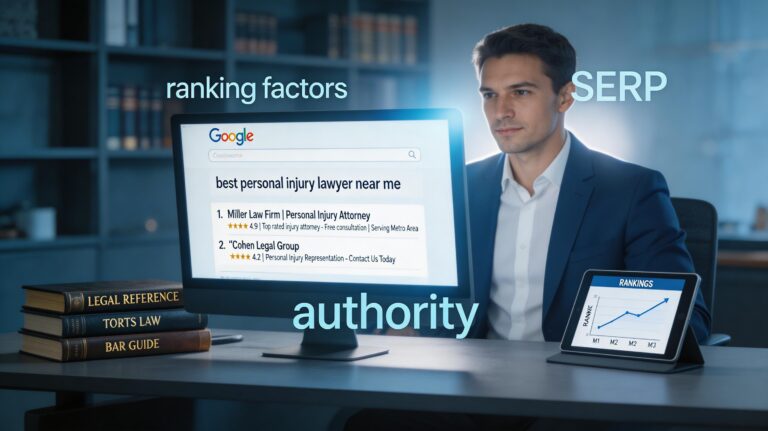
Let’s get real: clients don’t just wander into law offices anymore. They Google. They scan reviews. They make snap decisions in under 8 seconds based on search results.
If you’re a solo attorney or running a small law firm, you’re not competing with just your neighbor — you’re up against online legal giants, sleek marketing agencies, and platforms that eat up Google’s front page real estate.
💡 Stat Check: According to industry data, over 70% of legal service clients start with an online search, and 63% contact only the top three results they see.
Without SEO? You’re invisible.
With SEO? You’re in the room, in the conversation, on the shortlist.
Understanding SEO for Law Firms
What is SEO?
SEO — Search Engine Optimization — is the art (and science) of getting your website to appear at the top of Google when someone searches for your services. For lawyers, that could mean ranking for “divorce lawyer in Miami” or “best small business attorney near me.”
Think of it like your digital handshake — the stronger it is, the more likely someone will trust you enough to click.
How Search Engines Rank Law Firm Websites
Search engines are basically digital matchmakers. They look for three things when deciding which lawyer to recommend to a searcher:
- Relevance – Does your site match the search query? (Keywords matter here.)
- Authority – Do other reputable sites link to you?
- User Experience – Is your site fast, mobile-friendly, and trustworthy looking?
Why SEO is Especially Important for Solo and New Practices
Big firms have marketing budgets the size of small countries. You don’t. But the beauty of SEO? You can punch way above your weight.
SEO levels the playing field by allowing you to target specific, high-intent queries like:
- “low cost immigration lawyer in Austin”
- “best contract review attorney for startups”
By focusing on local SEO for law firms, you can own Google’s map pack, outranking even the biggest players for nearby clients who need you right now.
The Role of Local SEO in Finding Legal Clients
Local SEO is your hometown hero. It’s how you dominate “near me” searches and make sure you show up on Google Maps when someone nearby searches for legal help.
Key Local SEO Moves for Lawyers:
- Claim & optimize your Google Business Profile
- Get client reviews (Google loves them)
- Keep your NAP (Name, Address, Phone) consistent everywhere
Step-by-Step SEO Strategy for New Law Firms
Ready to wield this secret weapon? Let’s break it down.
Optimize Your Law Firm Website for Keywords
Your keywords are your hooks. Sprinkle them in headlines, service pages, and meta descriptions — but naturally. Google hates keyword stuffing as much as clients hate legal jargon.
📌 Pro Tip: Target long-tail keywords like “SEO checklist for solo attorneys” — fewer searches, but hotter leads.
Create Content That Answers Client Questions
Every potential client is a walking, talking FAQ. They’re Googling:
- “How much does a divorce lawyer cost?”
- “What’s the difference between a will and a trust?”
Answer these questions with blog posts, videos, and infographics — and watch traffic grow.
Leverage Google Business Profile for Local Reach
This is your digital shopfront. Upload photos, list your services, update your office hours, and respond to reviews. Google rewards activity with visibility.
Build Authoritative Backlinks from Legal Websites
Backlinks are like references vouching for your credibility. Aim to get featured on:
- Local bar association websites
- Legal directories like Avvo or Justia
- Guest posts on reputable legal blogs
Measuring SEO Success for Lawyers
Don’t guess. Measure. Use tools like Google Analytics and Google Search Console to track:
- Traffic growth
- Keyword rankings
- Conversion rate from site visits to consultations
If the graph is going up and the phone’s buzzing — you’re winning.
Common SEO Mistakes Law Firms Should Avoid
Even pros trip up here:
- Stuffing keywords unnaturally
- Ignoring mobile optimization (over 65% of legal searches are mobile)
- Skipping title tags & meta descriptions
- Neglecting reviews
Remember: SEO isn’t just getting found — it’s getting picked.
Latest Words
Here’s the truth: Law school taught you the law, but it didn’t teach you visibility. SEO is your 24/7 partner working while you’re in court, at lunch, or binge-watching your favorite legal drama.
If you master the game now, the benefits will stack up month after month. That’s why the firms that win online don’t just survive… they thrive.
So don’t wait. Optimize, publish, tweak, repeat. Your next client is probably Googling right now — will they find you or your competitor?
Comparison Table – Local SEO vs General SEO for Lawyers
| Factor | Local SEO | General SEO |
|---|---|---|
| Target Audience | Clients in specific geographic areas | Clients nationwide or internationally |
| Ranking Signals | Google Maps, NAP consistency, local citations | Keyword optimization, backlinks, site authority |
| Speed of Results | Faster for small areas | Slower, broader competition |
| Tools Needed | Google Business Profile, local directories | Content strategy, backlink building |
Quick Quiz for You — Drop Answers in the Comments!
- What’s the #1 ranking factor you think matters most for lawyers?
- If you could dominate one keyword in your city, what would it be?
- Have you claimed your Google Business Profile yet?






Leave a comment